A Different Approach to Tooth Removal
When a tooth needs to be removed, the procedure should involve more than simply taking the tooth out.
Dr. Eric D. Cornelius approaches tooth extraction from a biological and whole-body perspective, with careful attention to the tooth, surrounding bone, periodontal ligament, infection and inflammatory tissue, surgical materials, and the environment left behind for healing.
As an IABDM Certified Biological Dentist, Dr. Cornelius has pursued extensive advanced education in biological dentistry and biological oral surgery. He has also trained under internationally recognized biological dentist and ceramic implantologist Dr. Dominik Nischwitz (“Dr. Dome”) and has completed all certifications offered through the Dr. Nischwitz training programs in which he participated. Dr. Cornelius has also pursued advanced hands-on training with Dr. Judson Wall in Utah, a respected leader in biological and holistic dentistry. This additional training further expanded Dr. Cornelius’s knowledge of biological surgical techniques, extraction protocols, site management, and approaches designed to support optimal healing.
By training with experienced clinicians such as Dr. Dominik Nischwitz and Dr. Judson Wall, Dr. Cornelius has intentionally sought education beyond conventional dentistry to continually refine his approach to biological oral surgery and whole-body dental care.
This advanced training influences every stage of Dr. Cornelius’s surgical approach—from diagnosis and treatment planning to extraction, thorough site cleaning, ozone therapy, PRF, bone preservation, healing, and future ceramic implant placement when appropriate.
A conventional extraction is primarily focused on removing a tooth that can no longer be maintained.
A biological tooth extraction takes a broader approach.
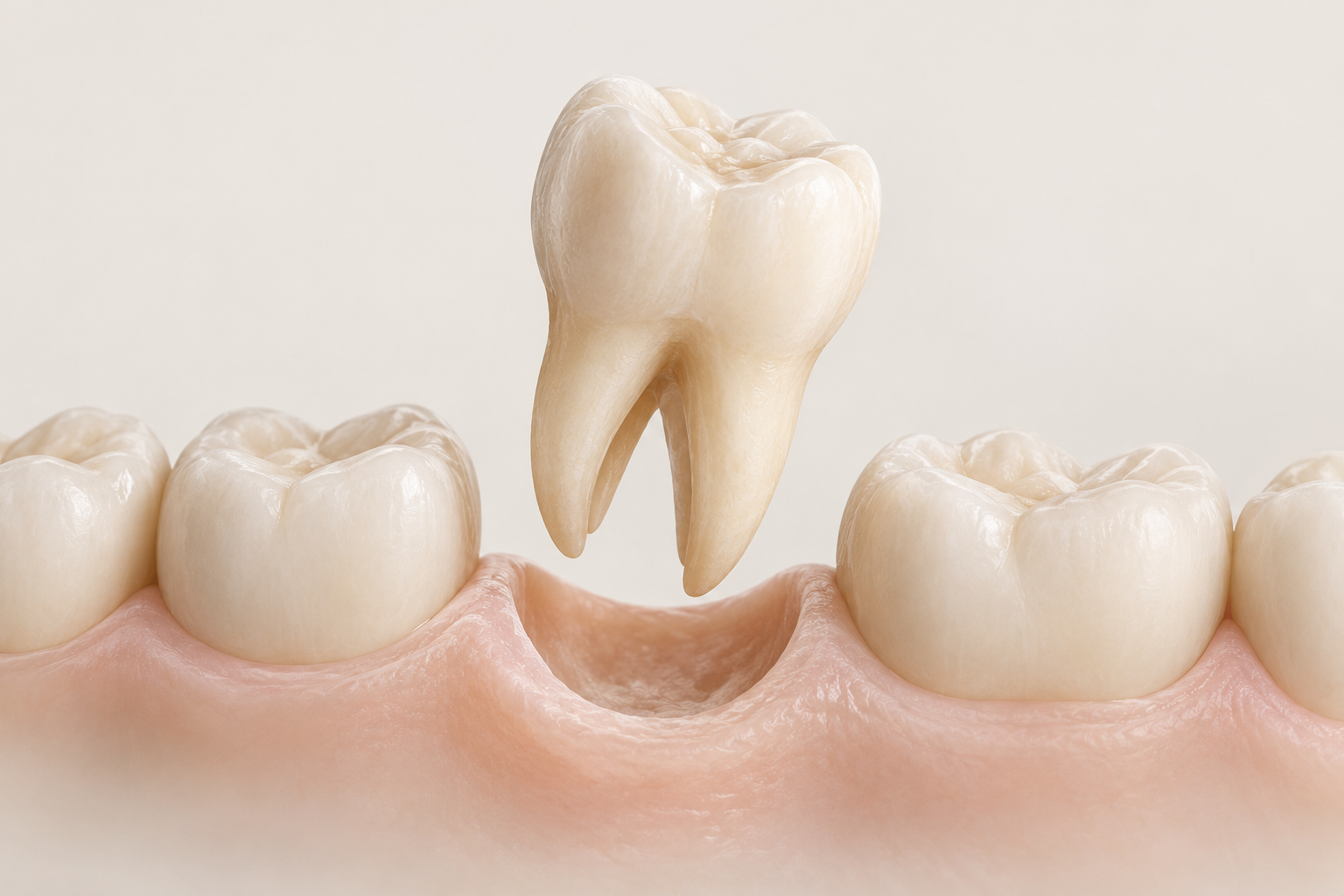
Dr. Cornelius carefully removes the tooth while working to preserve healthy surrounding bone and tissue whenever possible. After the tooth is removed, attention turns to the extraction socket itself.
The site is carefully evaluated and debrided to remove residual periodontal ligament and visible diseased, infected, or inflammatory tissue when clinically appropriate.
Depending on the individual situation, Dr. Cornelius may also incorporate ozone therapy, platelet-rich fibrin (PRF), bone grafting, and other biologically supportive techniques into treatment.
The objective is to leave behind a carefully managed surgical site and create conditions that support the body's natural healing process.
Preserving a patient's natural tooth is generally preferred when the tooth can be predictably restored and maintained.
However, there are situations in which extraction may be the more appropriate treatment.
These may include:
Every tooth is evaluated individually. Clinical findings, symptoms, imaging, structural integrity, surrounding bone and tissues, restorative options, and the patient's individual goals are considered before extraction is recommended.
Whenever possible, Dr. Cornelius uses surgical techniques intended to minimize unnecessary trauma and preserve healthy surrounding bone.
Bone preservation can be especially important when a ceramic dental implant is being considered to replace the tooth.
The extraction is therefore planned not only around removing the existing tooth, but also around protecting the foundation that may be needed for future restoration.
Removing the tooth is only part of a biological extraction.
Once the tooth has been removed, Dr. Cornelius carefully evaluates the socket.
Visible infected, diseased, or inflammatory tissue is removed when indicated, and the surgical site is thoroughly debrided and cleaned.
This is an important part of Dr. Cornelius’s biological surgical protocol.
The periodontal ligament is the connective tissue that surrounds the root and attaches a natural tooth to the bone.
Following extraction, Dr. Cornelius pays careful attention to the socket and removes residual periodontal ligament and pathologic tissue when clinically appropriate.
For Dr. Cornelius, treatment does not end when the tooth leaves the socket. How the remaining site is managed is an important part of the procedure.
Dr. Cornelius incorporates ozone therapy into many of his biological dental and surgical protocols. During a biological extraction, ozone may be used as an adjunct during management of the surgical site. This allows ozone to be incorporated directly into Dr. Cornelius’s broader protocol of cleaning and preparing the extraction site before healing begins.
Dr. Cornelius also incorporates platelet-rich fibrin (PRF) into biological oral surgery.
PRF begins with a small sample of the patient's own blood. The sample is processed to create a concentrated fibrin matrix containing platelets and naturally occurring components involved in the body's healing response.
The resulting PRF can then be placed directly into the surgical site.
Because PRF comes from the patient's own blood, it provides Dr. Cornelius with a way to incorporate the patient's own biological material into the extraction site as part of the surgical and healing protocol.
PRF may be used alone or in conjunction with other procedures such as bone grafting, depending on the patient's needs.
Following tooth removal, the bone that once supported the tooth naturally begins to remodel.
If a future dental implant is being considered, preserving adequate bone can be particularly important.
Dr. Cornelius evaluates the condition and volume of the surrounding bone before and during treatment. When appropriate, bone grafting or socket preservation may be recommended to help maintain or rebuild the foundation needed for future restoration.
The decision is based on the patient's anatomy, location of the tooth, condition of the surrounding bone, presence of infection, and long-term restorative plan.
Dr. Cornelius combines biological principles with advanced diagnostic tools to better understand each patient's anatomy.
Dr. Cornelius uses 3D CBCT imaging to provide detailed information about the tooth, roots, surrounding bone, sinus anatomy, nerves, areas of bone loss, and other important structures.
This may be especially valuable when evaluating:
Detailed imaging allows Dr. Cornelius to plan surgery based on the individual patient's anatomy rather than taking a one-size-fits-all approach.
Patients frequently seek Dr. Cornelius for a biological evaluation of an existing root canal-treated tooth.
Dr. Cornelius evaluates the individual tooth, symptoms, surrounding bone and tissues, existing restoration, clinical findings, imaging, and the patient's concerns.
When appropriate, options are discussed so the patient can make an informed decision.
If the tooth has a poor prognosis or the patient and Dr. Cornelius determine that extraction is the appropriate treatment, the tooth can be removed using Dr. Cornelius’s biological surgical protocol.
Dr. Cornelius has intentionally pursued advanced education from leaders in biological dentistry to continually refine the way he approaches oral health and surgery.
In addition to being an IABDM Certified Biological Dentist, Dr. Cornelius has trained extensively under Dr. Dominik Nischwitz, internationally known for his work in biological dentistry, ceramic implantology, biological surgery, nutrition, and the relationship between oral and systemic health.
This advanced education has influenced Dr. Cornelius’s approach to surgical dentistry, including extraction-site management, biological healing protocols, ceramic implantology, and the importance of considering the patient's overall health—not simply the individual tooth being treated.
For Dr. Cornelius, advanced training is not about collecting credentials.
It is about continually improving how biological dentistry is performed.
Before removing a tooth, Dr. Cornelius also considers an important question:
What happens after it is gone?
Depending on the location, leaving a missing tooth may affect chewing, neighboring teeth, bite relationships, bone, aesthetics, and overall function.
Whenever possible, the long-term restorative plan is considered before the extraction takes place.
Options may include:
For patients seeking a metal-free solution, Dr. Cornelius uses SDS ceramic dental implants made from high-performance zirconia.
Ceramic implants allow Dr. Cornelius to replace a missing tooth using a metal-free implant system consistent with his biological approach.
When ceramic implant treatment is planned, the condition of the bone, extraction technique, site management, healing, and future implant position are considered from the beginning.
Depending on the clinical situation, a metal-free ceramic bridge may provide another option for replacing a missing tooth.
There is no single replacement option that is appropriate for every patient.
Dr. Cornelius evaluates bone, gum health, bite, neighboring teeth, aesthetics, oral health, and the patient's individual preferences before recommending treatment.
When a tooth is being removed with the intention of placing an SDS ceramic implant, implant planning ideally begins before extraction.
Dr. Cornelius evaluates the available bone, infection or inflammation, soft tissue, bite, anatomy, and future restorative needs.
Treatment may then involve:
The exact sequence varies from patient to patient.
Immediate implant placement may be appropriate in certain situations, while other sites benefit from healing or bone development before implant placement.
Dr. Cornelius determines timing based on the individual clinical situation rather than following the same protocol for every patient.
This is perhaps the most important distinction in Dr. Cornelius’s approach to biological tooth extraction.
The tooth may be the reason for the procedure, but the surgical site and the patient's healing environment matter too.
Dr. Cornelius’s biological approach may incorporate:
Every procedure is individualized according to the patient's clinical needs.
For patients searching for a biological tooth extraction, holistic dentist, or biological dentist in San Antonio, Texas, Dr. Eric D. Cornelius provides an approach that looks beyond simply removing the tooth.
As an IABDM Certified Biological Dentist with advanced training under Dr. Dominik Nischwitz, Dr. Cornelius combines biological principles, advanced technology, careful surgical technique, and individualized treatment planning.
If you have an infected, fractured, failing, or previously treated tooth and are considering extraction, the first step is a comprehensive evaluation.
Dr. Cornelius can evaluate the tooth, surrounding bone and tissues, available imaging, and your long-term goals to determine whether the tooth can be predictably maintained or whether extraction should be considered to achieve optimal health.
If removal is appropriate, Dr. Cornelius will explain his biological extraction protocol, options for supporting the surgical site, and—when needed—metal-free options for replacing the missing tooth.
Schedule a consultation with Dr. Eric D. Cornelius to learn more about biological tooth extraction and a whole-body approach to oral surgery.
Request An Appointment