A Biological, Metal-Free Approach to Replacing Missing Teeth
For patients seeking an alternative to traditional titanium dental implants, Dr. Eric D. Cornelius offers metal-free ceramic dental implants using SDS (Swiss Dental Solutions) implant systems.
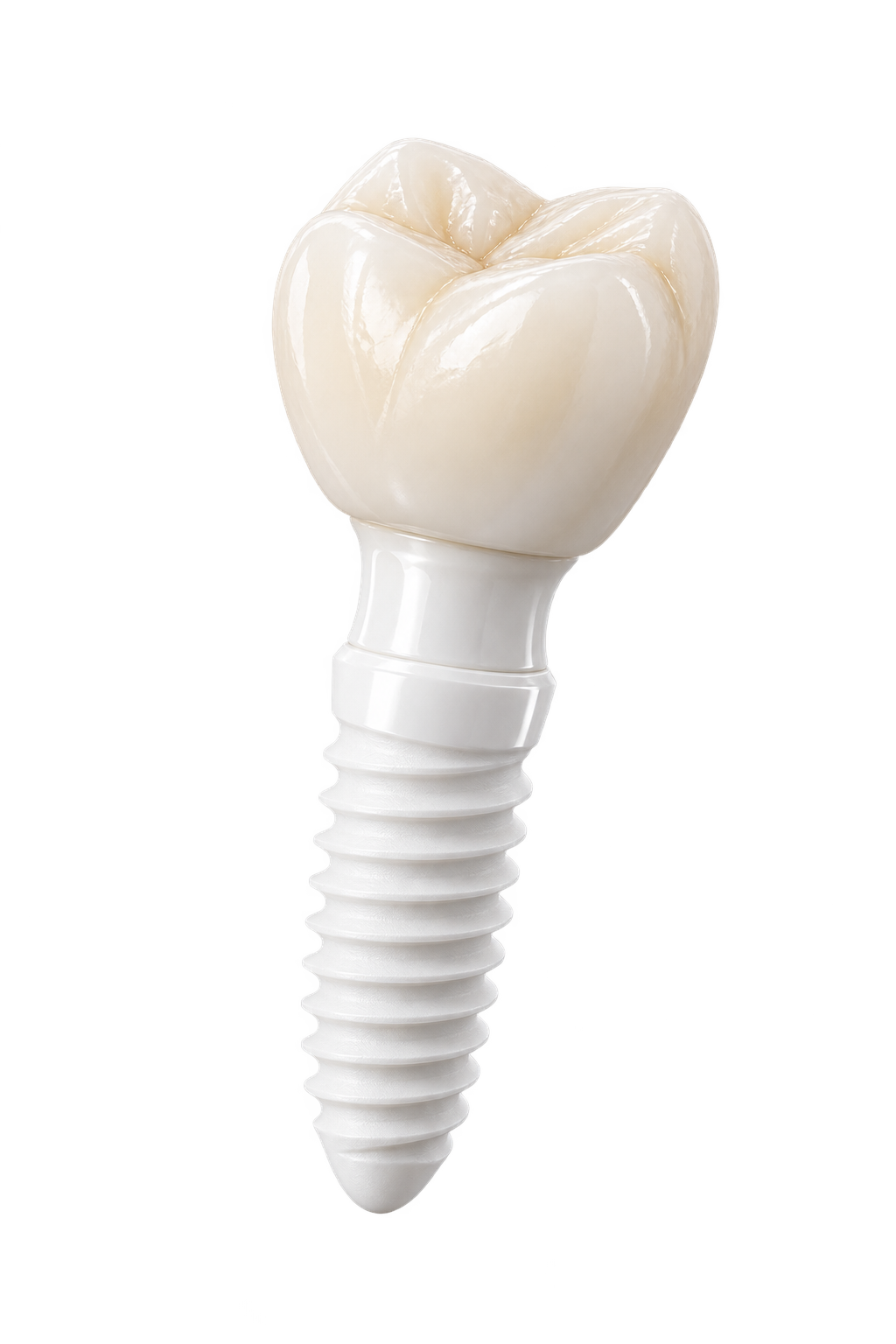
Made from high-performance zirconia ceramic, SDS implants provide a strong, biocompatible, metal-free option for replacing missing teeth. Their naturally white appearance, excellent tissue compatibility, and metal-free composition make them particularly well suited to Dr. Cornelius’s biological and holistic approach to dentistry.
Dr. Cornelius believes replacing a missing tooth should involve more than filling an empty space. Implant treatment should consider the health of the bone and gums, the materials being introduced into the body, proper function and bite, aesthetics, and the patient's overall oral environment.
For patients searching for ceramic dental implants or metal-free dental implants in San Antonio, Texas, Dr. Cornelius provides individualized treatment centered around biological principles and advanced implant technology.
A dental implant replaces the root portion of a missing tooth and provides a foundation for a dental restoration.
Traditional dental implants are commonly made from titanium. Metal-free implants are instead manufactured from zirconia, a high-strength ceramic material that has been used in dentistry and medicine for many years and is biocompatible with the body.
Dr. Cornelius uses SDS ceramic dental implants, considered the best in the world, which are designed specifically for patients and clinicians seeking a metal-free approach to implant dentistry.
Once the implant has integrated with the surrounding bone and the area has healed appropriately, a customized ceramic restoration can be placed to restore the appearance and function of the missing tooth.
The result is a tooth replacement designed to look, feel, and function naturally—without placing a metal implant in the jaw.
SDS—Swiss Dental Solutions—specializes in ceramic implant systems designed around zirconia implant technology and biological dentistry.
The SDS philosophy aligns closely with Dr. Cornelius’s approach: consider the entire biological environment surrounding the implant rather than viewing implant placement as an isolated surgical procedure.
Dr. Cornelius selected SDS implants because they allow him to offer patients an advanced metal-free implant option while maintaining his focus on quality, biocompatibility, tissue health, function, aesthetics, and biologically conscious treatment planning.
SDS implants are made from zirconia ceramic rather than titanium, providing an option for patients who prefer to avoid metal implants.
Zirconia is known for its biocompatibility and has a long history of use in medical and dental applications.
For Dr. Cornelius, material selection is an important part of biological dentistry. He carefully considers the materials used when restoring or replacing teeth and favors biocompatible, metal-free options when clinically appropriate.
Unlike gray titanium, zirconia is naturally white.
This can provide an aesthetic advantage, particularly in areas where the gum tissue is thin or the implant is located toward the front of the smile.
Healthy gum tissue around an implant is essential to long-term implant care.
Ceramic implant surfaces and designs are intended to support favorable interaction with the surrounding oral tissues while allowing patients to maintain appropriate oral hygiene.
Modern zirconia ceramics are engineered to withstand the functional demands placed on dental restorations.
Proper implant positioning, bone support, bite forces, restoration design, oral hygiene, and patient-specific factors all play important roles in the long-term success of implant treatment.
Dr. Cornelius approaches implant dentistry differently.
Before recommending a ceramic implant, he evaluates the entire oral environment.
This includes assessing:
Advanced 3D CBCT imaging is also used to evaluate the jawbone and surrounding anatomical structures before treatment.
The goal is to create an implant treatment plan that considers not only where the implant will be placed, but also the biological environment in which healing must occur.
When a damaged or infected tooth must be removed before implant placement, Dr. Cornelius places significant emphasis on how the extraction site is managed.
His biological extraction approach focuses on careful removal of the tooth, thorough cleaning of the surgical site, preservation of healthy bone whenever possible, and creating an environment designed to support healing.
Dr. Cornelius incorporates therapies such as ozone and platelet-rich fibrin (PRF) into surgical treatment.
PRF is created from a small sample of the patient's own blood and concentrates platelets and fibrin into a material that can be placed at the surgical site as part of the healing process.
Bone grafting may also be recommended when additional bone volume is needed for implant placement.
Successful implant dentistry begins with careful planning.
Dr. Cornelius uses advanced dental technology, including 3D CBCT imaging, to evaluate the jawbone and important surrounding structures.
Three-dimensional imaging can help determine available bone, evaluate anatomy, and assist with planning the position of a ceramic implant.
This technology allows Dr. Cornelius to approach implant placement with a detailed understanding of the patient's individual anatomy before surgery begins.
Choosing a ceramic implant can also be part of a broader metal-free restorative approach.
After healing, Dr. Cornelius can restore the implant using highly aesthetic ceramic dentistry designed to complement the patient's natural teeth.
For patients who prefer metal-free dentistry, this creates the opportunity to replace a missing tooth with a ceramic implant and ceramic restoration while maintaining a consistent biological philosophy throughout treatment.
SDS ceramic implants may be considered for patients who:
Every patient's anatomy and dental needs are different. A comprehensive examination and appropriate imaging are necessary to determine whether ceramic implant treatment is suitable.
Titanium has been used successfully in implant dentistry for decades and remains widely used.
Ceramic implants provide another option.
For patients specifically seeking a metal-free solution, zirconia implants allow the root replacement as well as the visible restoration to be created without a conventional titanium implant.
Dr. Cornelius believes patients should understand their options and the materials being considered before making decisions about their dental care.
His role is to evaluate the clinical situation, explain the available options, and help each patient determine which approach best aligns with their dental needs and personal preferences.
Replacing a missing tooth is an important decision.
Dr. Cornelius combines SDS ceramic implant technology, advanced diagnostics, biological surgical principles, biocompatible materials, and individualized treatment planning to provide an alternative for patients seeking metal-free implant dentistry.
His approach is not simply about replacing a tooth.
It is about creating a healthy foundation, choosing materials thoughtfully, preserving healthy tissues whenever possible, restoring proper function, and considering the mouth as part of the whole body.
If you are looking for ceramic dental implants, zirconia implants, SDS implants, or metal-free dental implants in San Antonio, Texas, Dr. Eric D. Cornelius offers a biological approach designed around the individual patient.
Learn whether an SDS ceramic dental implant may be an appropriate option for replacing your missing or failing tooth.
Schedule a consultation with Dr. Eric D. Cornelius to explore a metal-free approach to dental implant treatment.